Scalp micropigmentation for thinning hair addresses a specific and common concern: the visible contrast between fine or sparse hair and the scalp beneath it. When hair thins gradually, the scalp becomes increasingly visible, and that contrast, more than the volume of hair lost, is often what makes thinning most noticeable.
SMP does not reverse that process biologically. What it does is reduce the visual contrast by placing precise points of pigment between existing hair strands, creating the appearance of greater density without surgery, medications, or recovery time. Understanding exactly what that means, and what it does not mean, is what makes a consultation genuinely useful.
Scalp micropigmentation with existing hair works differently from SMP performed on a fully shaved scalp. Rather than creating the impression of a close-cropped buzz cut, the technique is adapted to blend with the hair that remains, targeting the areas where scalp visibility is most apparent.
Specialized pigment is deposited into the upper layers of the scalp in small, precise dots that replicate the appearance of follicles. When distributed across thinning areas, these dots reduce the skin-to-hair contrast that makes sparse coverage stand out, producing a more uniform, denser-looking surface.
When all of these elements are planned carefully, the result integrates with the existing hair rather than appearing as a separate layer underneath it.
The areas most commonly assessed for micropigmentation for thin hair include:
where diffuse thinning tends to produce the most visible scalp contrast, particularly under direct lighting
where gradual recession creates an irregular or softened frontal line
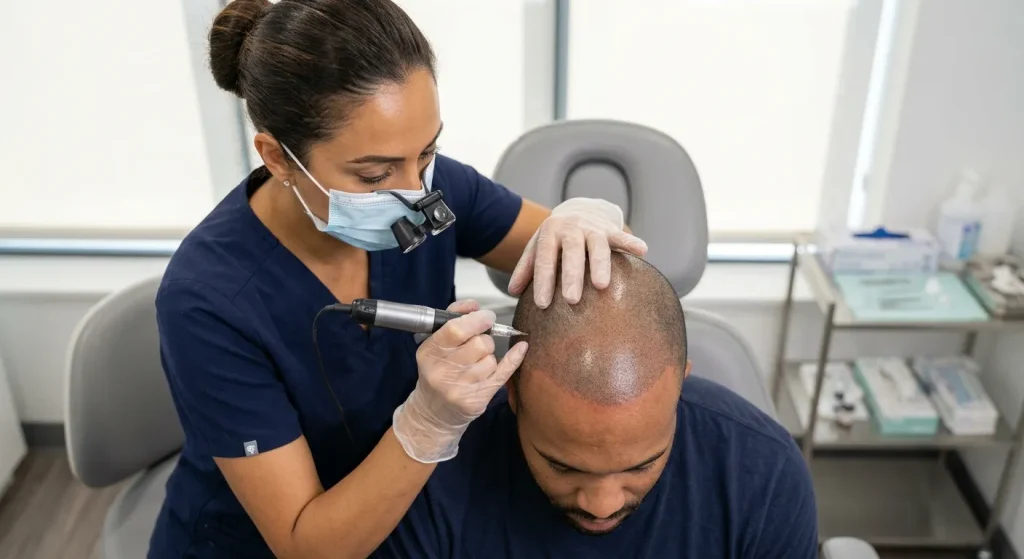
where parting lines become wider and scalp visibility increases with density loss
in patients who have retained coverage overall but whose hair no longer provides uniform concealment
Not every zone is equally suitable for the same approach, and not every patient’s existing hair creates the same starting conditions. A treatment assessment is necessary to determine which areas can realistically benefit and how the pigmentation should be planned in each case.
The short answer is: it depends. When SMP is performed on a fully bald scalp, a close shave is standard. When the procedure is planned around existing hair, the preparation varies.
In some cases, the hair around the treated area may need to be trimmed to allow precise pigment placement and accurate visual blending. In others, the procedure can be performed without significant cutting, depending on the hair length, the zone being treated, and the density effect being targeted.
The specialist responsible for the procedure is the right person to indicate how to prepare for each specific case, since the same general rule does not apply to every patient or every area.
This distinction matters, and a reputable clinic communicates it clearly before any procedure begins.
The result must be planned with the patient’s future in mind. If hair loss continues after the procedure, the relationship between the pigmented areas and the remaining hair will change over time, and the treatment plan should account for that possibility from the start.
where the hair remains, how it is oriented, and how much contrast currently exists
pigment selection is matched to complement both the scalp and the hair color simultaneously
the pigment must blend with the patient’s natural tone, accounting for any gray, highlighted, or color-treated strands
the specialist evaluates how the hair loss is likely to evolve and whether the planned pigmentation will remain coherent as the hair changes
are established during the consultation, including what the result will look like immediately after the procedure, after healing, and over time
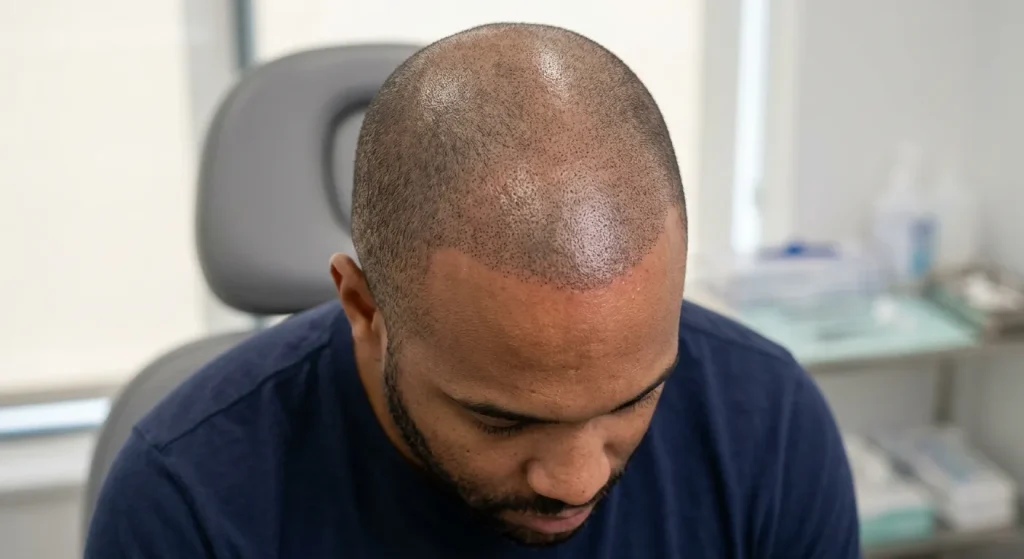
The answer depends on your current hair density, the areas where scalp visibility concerns you most, the rate at which your hair loss is progressing, and what you are hoping the result will look like.
At Cancun Hair Restoration, the medical team evaluates each patient individually before recommending scalp micropigmentation, because the procedure is not a universal solution and the starting conditions vary significantly from one patient to the next. The consultation is designed to give you a clear picture of what SMP can realistically achieve for your specific case, including what it will look like as your hair continues to change over time.
Contact Cancun Hair Restoration today!
Copyright © 2025 Cancun Hair Restoration. All rights reserved