
If you have noticed early signs of thinning and you wear a cap or hat regularly, it is natural to wonder whether your headwear is part of the problem. This is one of the most persistent questions in hair health, and the answer deserves a clear, evidence based explanation rather than another internet myth.
The short answer is no. Current scientific evidence consistently shows that everyday hat wearing does not cause hair loss, since hair follicles are nourished through the bloodstream rather than the scalp surface, meaning a normally fitted hat poses no meaningful risk to follicle health.
No research has directly linked wearing a hat with an increased risk of hair loss. Most cases of hair thinning are explained by entirely different factors such as genetics, hormones, or underlying medical conditions (not your headwear).
So why does this myth persist? The answer has, actually, more to do with perception than biology.
When you remove a hat after several hours, it is common to find loose strands clinging to the fabric. This creates the impression that the hat pulled hair out, when in reality, those strands were already in their natural shedding phase and simply got caught in the material.
Losing 50 to 100 hairs per day is a completely normal part of the hair growth cycle. People who wear hats frequently are more likely to notice this normal shedding (because the hat collects it) and mistakenly attribute it to the hat itself, rather than recognizing it as routine turnover.
Many men begin wearing caps more often during their twenties and thirties, which happens to coincide with the typical age range when androgenetic alopecia first becomes noticeable. This overlap in timing creates a false sense of cause and effect, when the real driver is genetic predisposition that was already present.
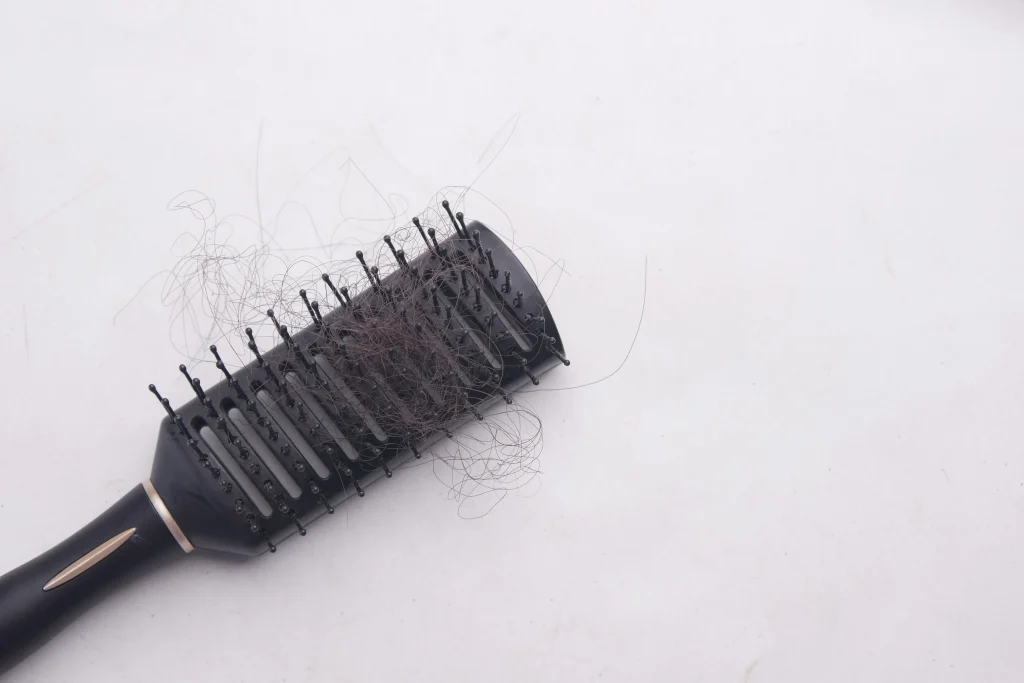
Conditions involving thyroid imbalances, postpartum hormonal shifts, and menopause can all trigger noticeable hair thinning, independent of any headwear habits.
Autoimmune conditions such as alopecia areata, along with certain medications and chronic illnesses, can also result in hair loss patterns that have nothing to do with hats.
Low levels of iron, zinc, biotin, or protein can compromise follicle health and contribute to thinning, particularly in women.
Androgenetic alopecia, the most common form of hair loss, is primarily driven by genetic sensitivity to DHT (a byproduct of testosterone). This sensitivity gradually shrinks affected follicles over time, regardless of whether a person wears hats.
Significant physical or emotional stress can push large numbers of follicles into a resting phase simultaneously, a condition known as telogen effluvium, which produces diffuse shedding weeks after the triggering event.
While ordinary hat use does not cause baldness, this does not mean all headwear habits are entirely without risk.
Hats absorb sweat, oil, and dead skin cells, and when they are not cleaned regularly, bacteria and fungus can build up inside the fabric, which may irritate the scalp and cause itching or dandruff when worn for long periods. This irritation does not cause permanent baldness, but it can worsen existing shedding.
This is the one legitimate exception worth understanding clearly. Traction alopecia is caused by sustained tension on the hair follicle, typically from tight hairstyles or headwear, rather than from ordinary hat use. One study found that 34% of women who wore tight head coverings for 7 to 9 hours daily developed some degree of hair loss, compared to only 3% among those who wore them for under 3 hours.
Hats that rub against the same spot can cause friction, especially for people with fine or fragile hair, leading to breakage rather than true hair loss from the follicle.

It is important to be clear: this is not the cause of common male or female pattern baldness. Early traction alopecia is reversible if the pulling stops, though long-term tight headwear can eventually cause permanent damage if left unaddressed.
In the days immediately following a hair transplant, the recipient area is extremely sensitive, and newly placed grafts have not yet anchored securely. Wearing a hat during this window can dislodge grafts through friction or pressure, which is why specialists recommend avoiding headwear entirely during the initial healing phase. Depending on the used technique (DHI, FUE, FUT or ARTAS), you may need to protect certain areas of your scalp from touching it.

Most specialists recommend waiting at least 10 to 14 days after the procedure before wearing any hat, and even then, only loose fitting styles that do not make contact with the treated area should be used. Tight caps, beanies, or anything that requires pulling over the scalp should be avoided for several weeks longer.
Specialists generally advise patients to choose hats with a wide, loose opening, avoid any direct pressure on the grafted area, and confirm timing with their surgeon before resuming normal headwear use, since healing speed varies from patient to patient.
Copyright © 2025 Cancun Hair Restoration. All rights reserved